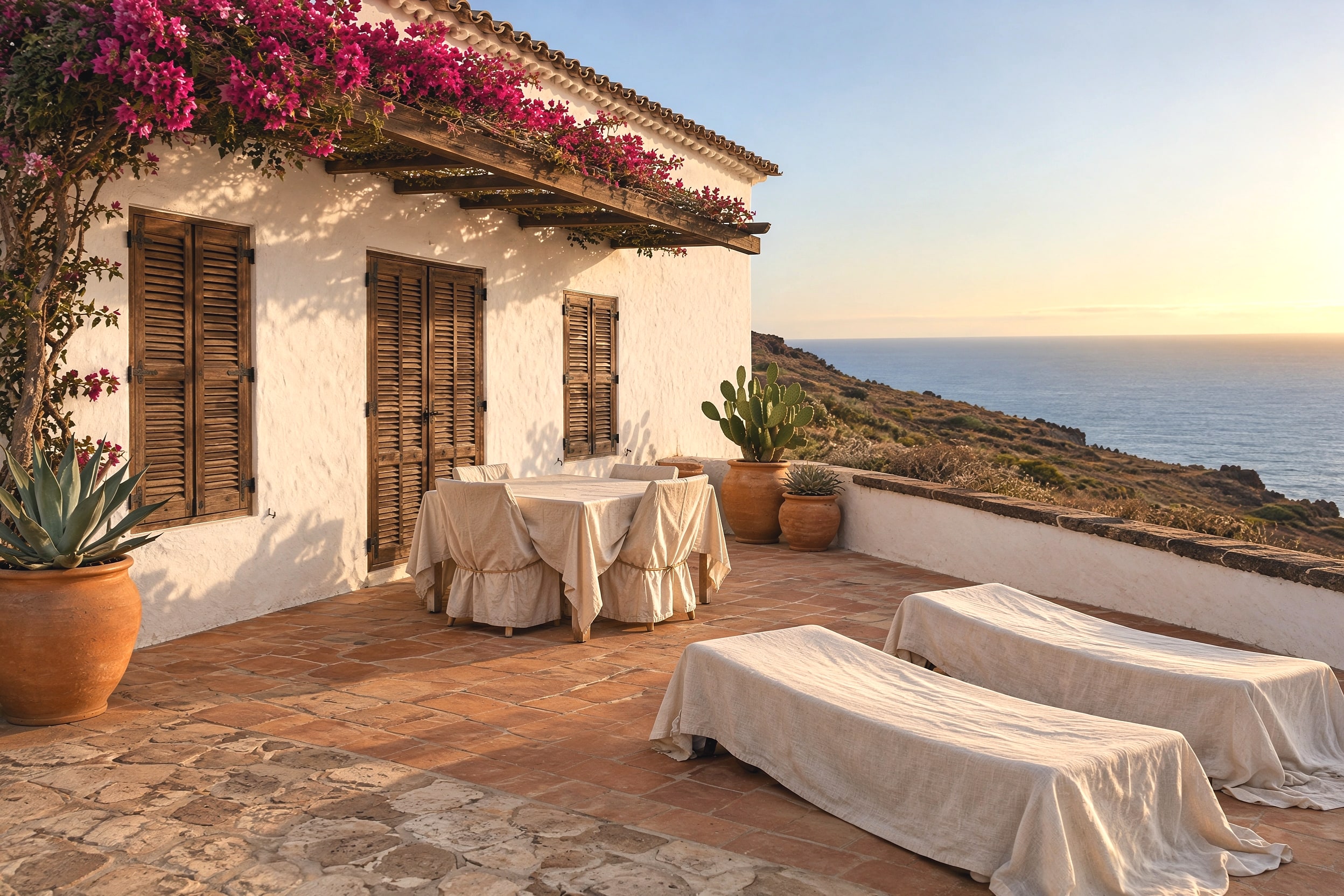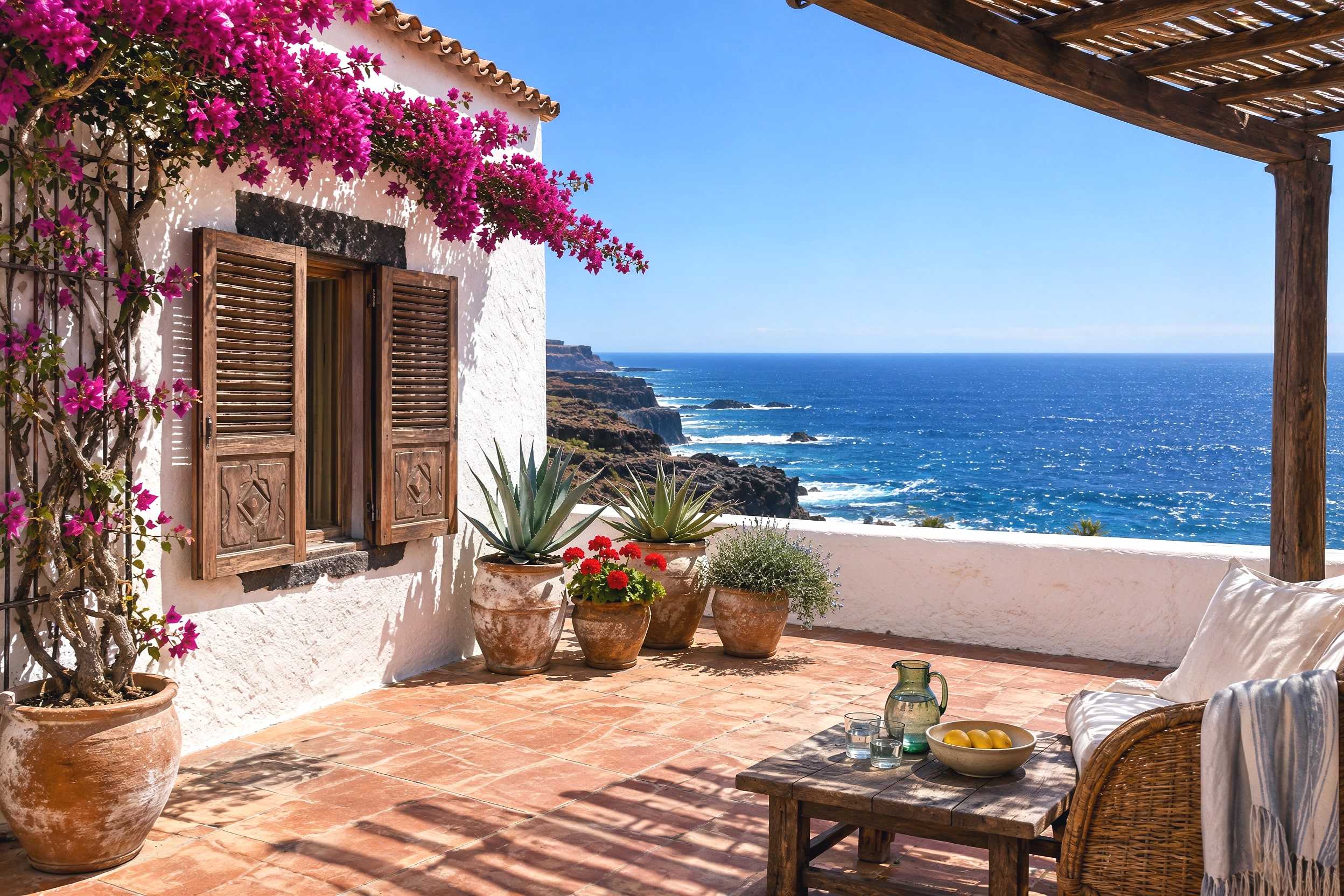
Gran Canaria's climate is often described as an eternal spring. That is true, but for a home that stays closed for weeks it pays to look at the numbers: how much sun, how much humidity, when it rains. We took the climate normals published by AEMET, Spain's State Meteorological Agency, and read them through the eyes of someone who looks after a home.
Important note
The figures are the 1981–2010 averages for the Gran Canaria Aeropuerto station (Ingenio, east coast). The climate varies a lot from area to area: the north and higher ground are usually more humid and rainy, the south drier and sunnier. Use these values as a general reference.
The numbers at a glance
- Sun: about 2,822 hours a year, from 179 hours in December to 308 in July.
- Relative humidity: between 64% and 69% in every month, with an annual average of 66%.
- Rain: about 151 mm a year, around 130 of them between October and March; from May to August, almost none.
- Average temperature: from 17.9 °C in January to 24.6 °C in August, with an annual average of 21.1 °C.
You can explore the same data, month by month, in the interactive chart on our home page.
Sun: a resource that wears things out
Between June and August there are more than 300 hours of sunshine a month. Direct light is the main cause of slow wear: fading fabrics, drying wood, outdoor plastics turning brittle and potted plants suffering as soon as the irrigation stops.
- Close shutters or curtains in the most exposed rooms when the home is empty.
- Cover outdoor furniture and cushions with breathable covers.
- Check that the irrigation works before the hottest months.
Humidity: constant, not seasonal
The most surprising figure is how steady the humidity is: it never drops below 64% and reaches 68–69% between September and December. In a lived-in home you barely notice it; in a closed home, still air meets the cold spots on the walls and you get a musty smell, stains and mould.
- Air the home thoroughly on every visit, opening windows on opposite sides.
- Check ceiling corners, built-in wardrobes and windowless bathrooms.
- Consider a dehumidifier in homes with little natural ventilation, especially in autumn and winter.
Rain: not much, but all at once
About 151 mm a year is not much, but it falls between October and March, with December the wettest month (about 31 mm). After months of drought, leaves, dust and calima build up in the drains: the first storm is enough to cause standing water on terraces or leaks.
- Clear terrace drains, gutters and gullies at the end of summer.
- Check the seals on windows, doors and skylights before October.
- After the first rains, look for new stains on ceilings and façades.
Temperatures: mild, but with sea air
Average temperatures stay between 18 and 25 °C all year: no frost and few sudden changes. The factor to watch is rather the salty sea air, which corrodes metal, locks and outdoor air-conditioning units, especially in homes near the coast.
- Rinse railings and outdoor metal with fresh water.
- Lubricate locks, hinges and sliding-door tracks.
- Have the air-conditioning filters checked and cleaned in spring.
A simple calendar
- September–November: clear drains and gutters, check seals and keep an eye on rising humidity.
- December–February: air the home more often, check wardrobes and fabrics, check dehumidifiers.
- March–May: clean outside areas, rinse metal, air-conditioning filters, garden and pool.
- June–August: sun protection, irrigation and more frequent pool checks.
The full checklist, point by point, is in our guide to caring for a closed home, which you will find on the blog.
If you cannot look after the home in person, at Ocean Property Care Canarias we organise home supervision with regular agreed visits and update you after each one.
Important note
Data source: AEMET, climate normals 1981–2010, Gran Canaria Aeropuerto station; reproduction authorised citing AEMET as the author. The advice in this article is general: installations and structures should be checked by qualified professionals.